
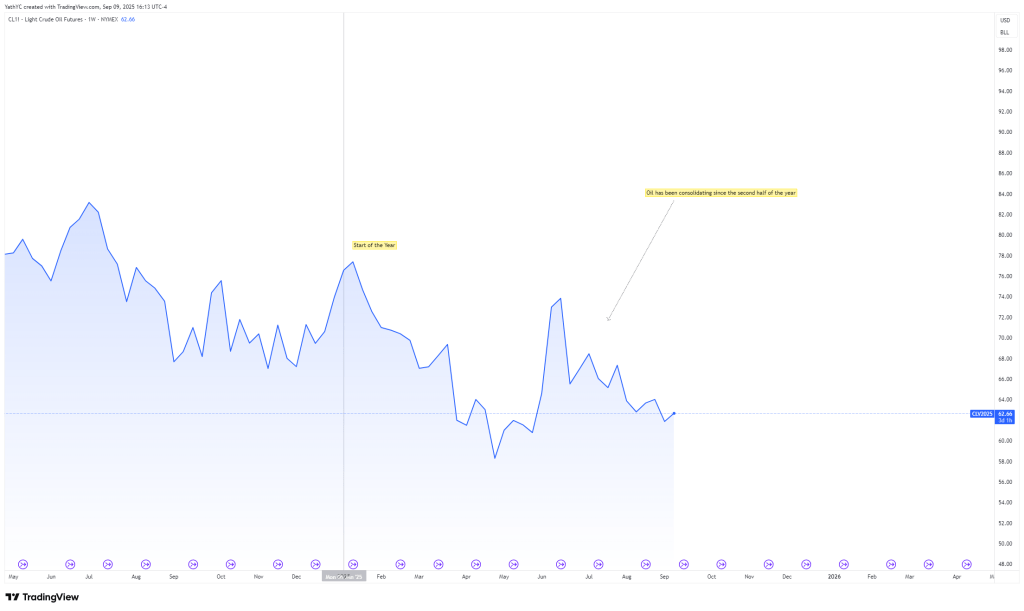
Over the past few months, the price of crude oil has stabilised around $50 per barrel. Households will be happy with this since it means stable prices for products linked to oil, such as sunflower oil or fuel. However, many businesses that rely on crude oil have faced constraints on their revenue due to lower oil prices.
Many firms, such as BP and ConocoPhillips, have made staff redundant as a way to reduce costs and balance books. With tariffs also weighing on its impact, oil businesses will likely look to sell up or cut costs at an extreme level.
What does it mean for you?
For households, it will be good news. Many forecasts crude oil prices to continue falling below $50 throughout next year, with demand switching to electric. Does that mean greater strain on the electricity network is a question to ask for another time, but it could spell the end of oil? Lower oil demand comes with lower demand for labour, which could lead to mass layoffs.
The increased focus on electrics means the cost of retraining labour is high. The idea of “fire and rehire” is unpopular within the Labour government, but it is the cheapest alternative for companies to minimise labour costs.
What to look out for
A country to look out for is the US. Its shale industry is in a position where most companies may collapse if there were an oil shock. Households may need to keep a look around at how many redundancies are there and what the process of recovery for oil-dependent firms is.
Another factor to consider is oil enthusiasts such as Trump. Trump is a market-moving figure. If there is one man out there who does the job, it is Trump himself. Earlier on, he advocated the idea of drilling for oil rather than focusing on renewable energies. Any pessimistic viewpoints may spell the end for oil producers in the US and the global economy as well.
Since demand has picked up post-pandemic, we are seeing demand levels creeping back up. Whether it will lead to higher demand levels is the final factor to look for. Countries that have an ageing population, such as Japan or South Korea, may see lower demand due to less usage of oil. Furthermore, these countries typically future-proof their economy, so it would be interesting to see what action they take in this particular situation.
 Econ Oddities
Leave a comment