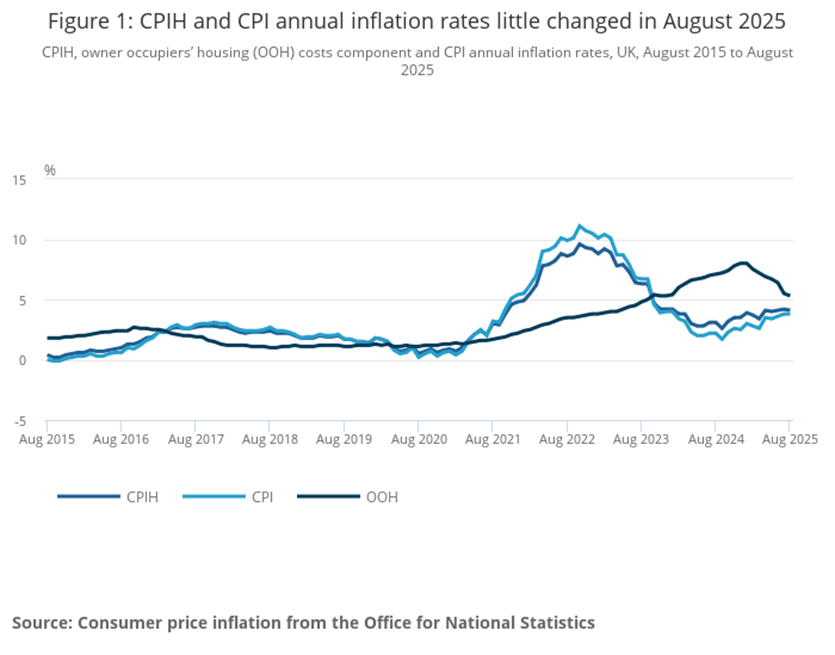
Inflation remained at 3.8% in August, the same as July, showing it’s still a threat to the economy. Food and non-alcoholic drinks prices rose from 4.9% to 5.1%, higher than predicted by analysts.
The ONS stated that there was a small rise in prices for vegetables, milk, cheese and eggs and fish. These rises were offset by a fall in bread, cereals and oil and fats. With Christmas coming around the corner, it is normal to experience inflation around this part of the year, with supermarkets making most of their profits from the second half of the year.
What does it mean to the Bank of England?
The Bank of England (BoE) committee will decide how much the rate will be cut tomorrow. It is largely expected that a 0.25-point basis cut to be favoured due to a cooler labour market and tougher business conditions coming from higher payroll taxes. A rate cut will be welcomed by households who are on variable mortgages. But is a 0.25 point cut enough to stimulate the economy?
The BoE will need to consider its forward guidance tomorrow. What messages will be conveyed regarding the outlook of the economy is important since the public will use them to form expectations. An aggressive outlook would mean faster rate cuts, which means faltering demand and a cooling down of inflation.
What does it mean for you?
Rachel Reeves reiterated today that she is acting by raising the national living wage, extending the £3 bus fare cap and expanding free school meals. Overall, it helps the lowest quartile of households, but the message should be to take action to keep prices stable.
With Reeves’ higher payroll taxes and new packaging tax having an impact on prices, what she decides this Autumn’s budget is vital. If inflation still higher, interest rates may remain high for longer. Therefore, the action taken to reduce prices is critical.
With inflation still persistent, is it too early for rates to be cut?
 Econ Oddities
Leave a comment